Water Safety for Children: What Every Parent Needs to Know
Water is one of childhood's great joys — and one of its most serious hazards. In the United States, more children aged 1–4 die from drowning than from any other cause, and for children aged 5–14 it is the second leading cause of unintentional injury death, after motor vehicle crashes. Yet it is also largely preventable. Understanding the risks clearly, and layering protective measures thoughtfully, can allow your family to embrace the water with confidence rather than fear.
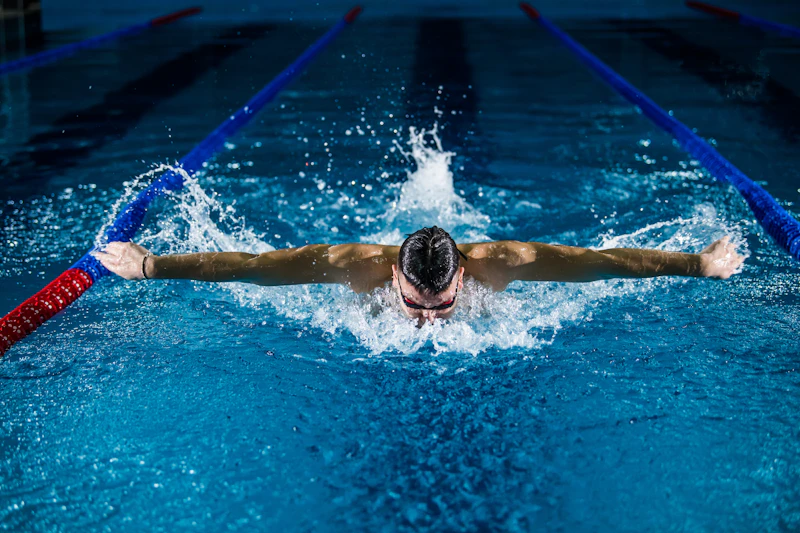
This isn't a topic designed to frighten. It's one designed to equip — with accurate information, clear guidance, and practical strategies that make water time genuinely safer for your child.
The Reality of Drowning Risk
According to the Centers for Disease Control and Prevention, about 4,000 people die from unintentional drowning in the United States each year, and more children aged 1–4 die from drowning than from any other cause. Many more experience non-fatal drowning events that can result in lasting neurological injury.
Several facts about child drowning are important for parents to understand:
- Drowning is silent: Movies and television depict drowning with splashing, shouting, and waving arms. Real drowning is quiet. A child in distress in water typically cannot call for help — their body's instinct is to position itself to breathe, which means arms extend outward rather than wave and the mouth is at water level. Silence in water is a warning sign, not safety.
- It is fast: A child can lose consciousness in water in as little as two minutes. A drowning event can be fatal in four to six minutes.
- It happens near adults: The majority of child drownings occur within a short distance of a supervising adult. Distraction is the most common contributing factor.
- Home pools are the most common location: For young children, residential pools — including visiting another family's pool — account for the majority of drowning deaths.
The Layers of Water Safety
The American Academy of Pediatrics recommends a "layers of protection" approach to water safety — no single measure is sufficient, but multiple layers together dramatically reduce risk.
Layer 1: Supervision
Active, uninterrupted supervision is the most important protective factor for children around water. The AAP recommends that an adult designated as the "water watcher" be within arm's reach of young children at all times in or near water. This means:
- Phone put away — checking messages or social media is incompatible with effective water supervision
- No alcohol consumption while serving as water watcher
- Explicit hand-offs: when you need to step away, verbally designate another adult before you move
- Never assuming another adult is watching without confirming explicitly
For children who have completed swim lessons and are competent swimmers, direct arm's-reach supervision may relax, but visual attention should never fully lapse. Swim competence reduces risk; it does not eliminate it.
Layer 2: Pool Barriers
Four-sided isolation pool fencing — a fence that completely surrounds the pool and separates it from the house and yard — reduces child drowning risk by approximately 83% according to research cited by the AAP. This is distinct from perimeter fencing around the yard, which provides no meaningful protection. Key specifications:
- Minimum height of 4 feet (many safety experts recommend 5 feet)
- No handholds or footholds that a child could use to climb over
- Self-closing, self-latching gate with the latch positioned out of a child's reach or on the pool side
- No gaps at the bottom that a child could squeeze under
Pool alarms, door alarms, and safety covers provide additional layers but should not substitute for isolation fencing.
Layer 3: Swim Lessons
Formal swim instruction significantly reduces drowning risk for children over age 1. The AAP stopped advising against swim lessons for children aged 1 to 4 in 2010, and its 2019 drowning-prevention policy went further: it now recommends swim lessons as a layer of protection that can begin for many children at age 1. The decision should be based on the individual child's developmental readiness, water exposure, and comfort level.
Swim lessons do not create "drown-proof" children — no child is drown-proof, and this misconception can actually increase risk by creating false confidence. What lessons do create is a meaningful layer of protection: children who know how to float, control their breathing, and reach a wall or edge have significantly better outcomes in accidental water entry events.
Look for lessons that emphasize water entry survival skills (floating, self-rescue to the wall) in addition to stroke development.
Layer 4: Life Jackets
Federal law requires children under 13 to wear a U.S. Coast Guard-approved life jacket on a recreational boat that is under way, unless they are below decks or in an enclosed cabin, and many states have their own rules. Beyond boats, the AAP advises that children always wear a properly fitted, Coast Guard-approved life jacket in, on, or near lakes and rivers — and that children without strong swim skills wear one at the pool or water park too.
Know the difference between a life jacket and a toy. Floaties, water wings, swim rings, and other inflatable toys are not safety devices: the AAP warns they can deflate and do not prevent drowning. Some products that look like toys are genuine life jackets — the original Stearns Puddle Jumper, for example, is sold as a Coast Guard-approved life jacket for children of 30–50 pounds — so check for the Coast Guard approval label and weight rating before you rely on anything. And no device, approved or not, replaces an adult within arm's reach.
A properly fitted life jacket fits snugly, does not ride up over the chin or face when lifted by the shoulders, and is the appropriate weight rating for the child. Try it in shallow water before relying on it in open water.
Layer 5: CPR Knowledge
Every parent of a young child should be trained in pediatric CPR. In the time it takes emergency services to arrive, CPR-trained bystanders can make the difference between a survival story and a tragedy. Community CPR training courses are widely available, often free, and take only a few hours. This is one of the highest-value investments you can make as a parent.
Review your technique annually — CPR guidelines update periodically, and skills fade without refreshment.
Water Safety Beyond the Pool
Pools are not the only water hazard for young children. The drowning risk landscape is broader than many parents realize:
- Bathtubs: Infants and toddlers can drown in as little as a few inches of water. Never leave a child unattended in the bath for any reason — if the phone rings or someone is at the door, take the child with you or let it go.
- Buckets, coolers, and containers: A toddler who topples headfirst into a bucket cannot right themselves. Empty containers completely when not in use, and do not leave buckets of water, standing coolers, or large containers accessible to young children.
- Natural bodies of water: Ponds, streams, lakes, and beaches present risks that differ from residential pools. Murky visibility, unpredictable currents, unexpected drop-offs, and boat traffic all add complexity. Life jackets should be worn on all boats and by non-swimmers near open water without exception.
- Irrigation ditches and drainage channels: Fast-moving water in agricultural and suburban drainage systems can overwhelm even capable swimmers. These should be treated as serious hazards, not play spaces.
Teaching Children About Water Safety
Age-appropriate water safety education begins early. The core messages to establish:
- "Never go near the water without an adult." Establish this rule before the first swim season and reinforce it consistently.
- "Always ask permission before getting in." Even backyard pools, even on hot days, even when others are already swimming.
- "If someone is in trouble in the water, throw something to help — don't jump in." Teaching children to throw a rope, ring, or inflatable rather than jumping in prevents a second victim situation.
- "If I fall in, I float on my back and call for help." Practice back floating in a safe, controlled environment so the skill is automatic.
These rules can be taught and reinforced as part of a calm, matter-of-fact family conversation — not in a way that creates fear of water, but in a way that builds a framework of respect for it. Water is wonderful and worth celebrating. It is also powerful and worth respecting. Both things can be true.
The Emotional Side of Water Safety
Parents sometimes struggle with the balance between protecting their child and allowing them to experience the joy of water freely. This tension is real, and it doesn't require a choice between the two. The goal is not fearful avoidance of water — it's competence and appropriate protection. Children who grow up with strong swimming skills, good water rules, and confident, present parents can have a rich, joyful relationship with water throughout their lives.
The strategies in our guide to outdoor nature activities and summer activities for kids offer more context for giving children rich outdoor experiences — including water — within a framework of genuine safety.
"Safety doesn't happen by accident." — Anonymous
A Quick Reference: Water Safety Checklist
- ✅ Designated water watcher with phone away during all water activities
- ✅ Four-sided isolation fencing around home pool with self-latching gate
- ✅ Swim lessons appropriate to child's age and developmental readiness
- ✅ Coast Guard-approved life jackets for boats and open water
- ✅ No floaties, water wings, or inflatable toys used as safety devices
- ✅ Empty buckets and large containers after use
- ✅ Never leave child unattended in bath, even briefly
- ✅ CPR training current and refreshed annually
- ✅ Water safety rules established, communicated, and practiced
Water is one of summer's greatest gifts. These layers of protection exist not to keep your child from it, but to ensure they can enjoy it safely — for many summers to come.
Want to stay updated on our journey?
Join our mailing list