The Power of Words: How Talking to Your Baby Shapes Their Brain
Before your baby speaks their first word, before they point or wave or babble, they are listening. From the final weeks in the womb, babies are tuning into the sounds and rhythms of language. By the time they arrive, they already recognise their mother's voice—and the research on what happens next is nothing short of remarkable.
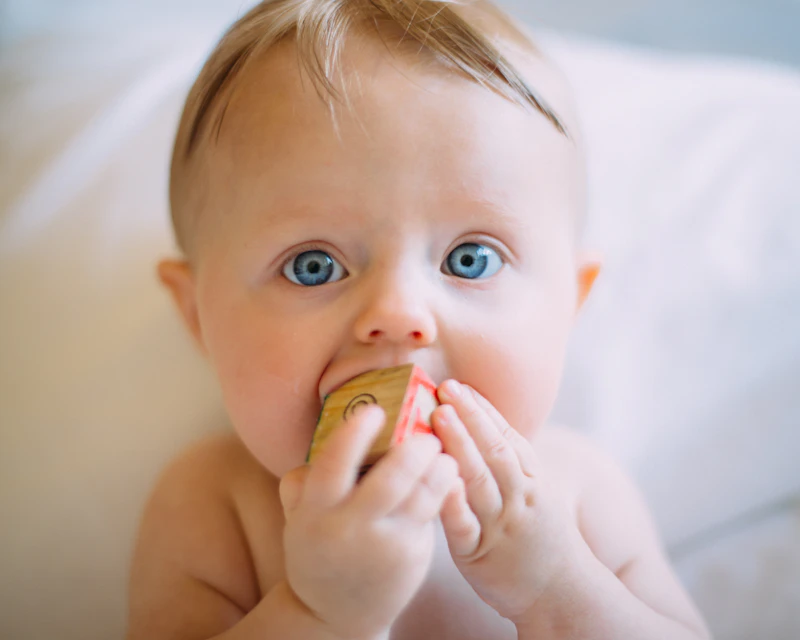
The way you talk to your child in the first three years of life is one of the most powerful investments you can make in their future. Not just for language development, but for thinking, reading, emotional intelligence, and lifelong learning. And the best part? You don't need special tools or programmes. You just need to talk.
Language Learning Begins Before Birth
By the third trimester, the auditory system is developed enough for babies to hear and process sounds from outside the womb. Studies have shown that newborns recognise their mother's voice immediately at birth and even show preferences for languages or stories heard repeatedly in utero. The rhythmic cadence of a familiar language is already encoded before that first breath.
This early start means that language learning isn't a switch that flips on at a certain age—it's a continuous process that begins before birth and accelerates rapidly in the first years of life. Every conversation, every lullaby, every narrated nappy change is building the neural architecture that language will live in for a lifetime.
The Science of Serve-and-Return
One of the most important concepts in early language development is what researchers at the Harvard Center on the Developing Child call "serve-and-return" interaction. The name comes from a simple analogy: when a baby babbles, coos, or reaches toward something, they are "serving" a social ball. When a caregiver responds—by making eye contact, imitating the sound, or naming the object—they "return" it.
These exchanges, repeated thousands of times each day, are the building blocks of brain architecture. Each serve-and-return interaction creates and strengthens neural connections in the brain's language and social-emotional centres. Environments where "serves" consistently go unanswered—where babies are left with screens or silence rather than responsive conversation—result in fewer connections and slower development across multiple domains.
The reassuring news: serve-and-return is intuitive. Most caregivers do it naturally when they are engaged and present. The challenge is maintaining that responsiveness during busy, exhausted days when it is easy to go on autopilot.
It's Not Just About Word Count
In 1995, researchers Betty Hart and Todd Risley published a landmark study suggesting that children from lower-income families heard 30 million fewer words by age three than their higher-income peers—the origin of the so-called "word gap." The finding sparked decades of policy and educational initiatives aimed at increasing children's word exposure.
More recent science has refined this picture considerably. While vocabulary exposure matters, the quality and responsiveness of conversation predicts outcomes far better than raw word count alone. A 2018 study published in Psychological Science recorded the home language of 36 children aged 4 to 6 and then scanned their brains as they listened to stories. Children who had experienced more conversational turns—back-and-forth exchanges with adults—showed greater activity in Broca's area, a key language region, and that activity helped explain the link between their language exposure and their verbal skills. The effect held over and above family socioeconomic status and the sheer number of words the children heard.
In other words: talking at your child is far less powerful than talking with them. Responsive, two-way conversation—even with a baby who can only respond with gestures and gurgles—is what builds language most robustly.
Talking to a Baby Who Can't Talk Back
If you have ever felt a little silly narrating your morning to a four-month-old, know that it is one of the most developmentally valuable things you can do. Here are proven approaches that make everyday caregiving rich with language:
- Sportscasting: Narrate what is happening in real time. "Now I'm putting on your left sock. There it goes! And now the right one. All done!" This builds vocabulary, sequencing, and attentiveness to language as it unfolds.
- Label and describe richly: Go beyond nouns. "The dog is fluffy and brown—see his soft ears? He's wagging his tail. I think he's happy to see you!" Descriptive language builds a richer, more nuanced vocabulary than simple labelling alone.
- Ask questions and wait: "What do you think about this?" Then pause—genuinely pause—even if they can't answer yet. This teaches the rhythm of conversation: that speaking has spaces, and those spaces belong to the other person.
- Follow their gaze: When your baby fixates on something—a ceiling fan, a leaf, your earring—talk about that thing. Their attention is the invitation. Your words are the conversation.
- Name emotions: "You look a bit frustrated. This puzzle piece doesn't want to fit, does it?" Emotion labelling simultaneously builds vocabulary and emotional intelligence — a foundation we explore in depth in our guide to building your child's emotional vocabulary.
The Magic of Parentese
You have probably heard it dismissed as "baby talk," but researchers call it "parentese"—the slightly higher-pitched, slower, melodically exaggerated way that adults instinctively speak to infants. And far from being silly, it is scientifically valuable.
Parentese uses real words (unlike baby words that replace vocabulary with sound-alikes like "baba" for bottle), but delivers them with elongated vowels, exaggerated intonation, and slightly slower pacing. Research from the University of Washington found that parents who used more parentese had babies who developed larger vocabularies and stronger language skills by eighteen months compared to infants whose parents spoke in a more adult-directed register.
Why does it work? Parentese appears to be optimised for language learning. The exaggerated sounds make it easier for babies to distinguish phonemes—the sound units that make up language. The slower pace gives them more processing time. The higher pitch captures and holds infant attention more effectively. Your instinct to speak this way is, quite literally, your baby's first language lesson.
Reading Aloud as Conversation
Reading to your child is one of the most thoroughly researched strategies for language development across the early years. The American Academy of Pediatrics recommends reading aloud from birth, not just for the foundations of reading readiness, but for the bonding, conversational turns, and rich vocabulary that shared books naturally generate.
The most language-building kind of reading isn't recitation—it's dialogue. Pause and ask questions about the pictures. Let your child point to things and wait for you to name them. Talk about what the characters might be feeling. Relate the story to something that happened in their day. This approach, sometimes called dialogic reading, transforms story time into a language-rich exchange that builds vocabulary and comprehension simultaneously. The deeper magic of this practice—and why it matters well beyond language—is explored in our piece on the magic of bedtime stories.
Language Development Stage by Stage
What "talking" looks like evolves dramatically across the first three years. Here is a rough guide to what kinds of conversation are most supportive at each stage:
- 0–6 months: Focus entirely on responsiveness. Imitate their sounds, make eye contact, and respond to coos with genuine enthusiasm. This teaches them something profound: that their communication has power and that the world responds to them.
- 6–12 months: Narrate everything. Name body parts during bath time, describe food during meals, label objects on walks. Babies this age are building an inventory of words internally long before they can produce any of them.
- 12–18 months: Expand on their words. If they say "dog," you say "yes, big brown dog! The dog is running so fast." This expansion models more complex language without ever correcting them or making them feel wrong.
- 18–24 months: Start asking open-ended questions. "What happened?" "What should we do?" Simple yes-or-no questions are fine, but questions that require a real answer push language forward more effectively.
- 2–3 years: Have genuine conversations. Ask about their feelings, their ideas, their day. Let them ramble and resist the urge to finish their sentences. This stage is about building fluency and confidence, and the greatest gift you can offer is unhurried time and attentive listening.
Routine as a Language Laboratory
Predictable daily routines are not just emotionally regulating—they are powerful language-learning contexts. When you repeat the same words at the same time each day ("First we wash hands, then we dry them, then we're ready for dinner"), children internalise those language patterns with remarkable speed. The predictability of routine frees up cognitive resources; because the child already knows what comes next, they can focus their attention on the language layered within the sequence.
This is one reason why the power of routine in child development intersects so directly with language growth. The structure of a reliable daily rhythm creates scaffolding on which language can be reliably practised and built upon, day after day.
When to Seek Support
Language development varies considerably between children, and the range of "typical" is genuinely wide. That said, certain milestones are worth knowing—and when a child misses them, early intervention can make a meaningful difference. The CDC's milestone checklists list skills that most children (75% or more) reach by a given age. For language, they include:
- Taking turns making sounds with you, blowing "raspberries," and squealing by 6 months
- Making lots of different sounds like "mamamama" and "bababababa," and looking when you call their name, by 9 months
- Calling a parent "mama," "dada," or another special name, and waving "bye-bye," by 12 months
- Trying to say one or two words besides "mama" or "dada" by 15 months
- Saying at least two words together, like "more milk," by 2 years
- Saying about 50 words by 30 months
- Holding a conversation with at least two back-and-forth exchanges, and talking well enough for others to understand most of the time, by 3 years
These are gentle guideposts, not a pass-or-fail checklist. Some children build an enormous vocabulary silently and then speak in full sentences seemingly overnight. Others talk early and constantly. But if your child isn't meeting one or more milestones, or has lost skills they once had, the CDC's advice is not to wait: talk to your paediatrician. Early speech-language support, when needed, is highly effective—and earlier is almost always better.
For a broader perspective on how language fits into the full picture of early development, our guide to growth milestones in the first years offers a warm and reassuring roadmap.
The Joy at the Centre of It All
All of this research converges on something beautifully simple: the most powerful thing you can give your child is your engaged, responsive presence. Not a particular programme or a precise word quota, but genuine connection—talking, listening, responding, and being curious about who they are becoming.
The science is extraordinary, but the practice is ancient. Humans have been talking to their babies since the very beginning of language. In a world full of screens and competing demands, the most radical gift you might give your child's developing brain is also the most ordinary: put everything else down, look at their face, and talk to them.
"Language is the road map of a culture. It tells you where its people come from and where they are going." — Rita Mae Brown
Whether you are chatting through a nappy change, pointing out birds on a walk, or reading the same board book for the forty-seventh time, know that every word is working. Discover tools to support your parenting journey at every stage—because the conversations you start today last a lifetime.
Want to stay updated on our journey?
Join our mailing list