Creating Calm: Building a Peaceful Home Environment
In today's fast-paced world, our homes should be sanctuaries—places where both children and adults can decompress, connect, and find peace. Creating this environment doesn't require a complete renovation; often, small intentional changes make the biggest difference.
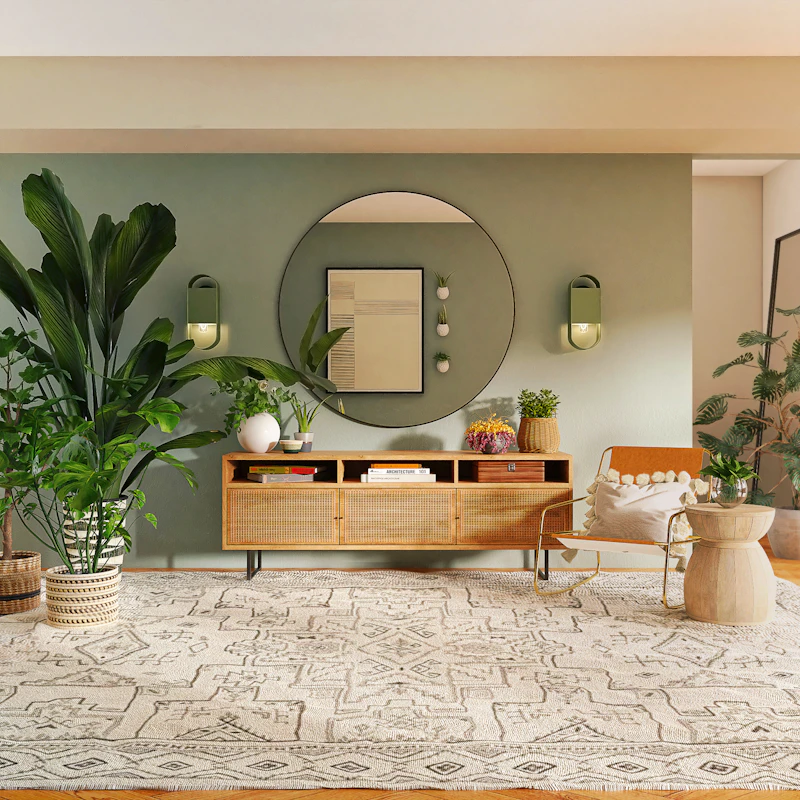
The Power of Sensory Design
Children experience the world intensely through their senses. A calm home considers all five: soft lighting instead of harsh overheads, comfortable textures to touch, pleasant subtle scents, minimal noise pollution, and organized visual spaces.
Start by observing your space through your child's eyes—literally. Get down to their level and notice what they see. Is the visual field cluttered or calm? Are there soft places to land? Does the lighting feel harsh?
Designated Quiet Zones
Every home benefits from having at least one designated quiet zone. This doesn't need to be an entire room—it could be a cozy corner with cushions, a reading nook under the stairs, or even a small tent filled with soft blankets.
The key is consistency. When children know there's always a peaceful space available to them, they learn to seek it out when they need to regulate their emotions or simply recharge.
Light and Its Impact
Lighting profoundly affects our mood and energy levels. Natural light during the day supports healthy circadian rhythms, while warm, dim lighting in the evening signals to our bodies that it's time to wind down.
Consider installing dimmer switches in key areas, using warm-toned bulbs (2700K or lower), and reducing blue light exposure from screens in the hours before bedtime. These simple changes support healthy sleep habits and can make a significant difference in your family's overall sense of calm.
Sound Matters
We often underestimate how much ambient noise affects us. The constant hum of electronics, traffic sounds, or even a loud refrigerator can create a subtle but persistent stress response.
Take inventory of the sounds in your home. Can any be reduced or eliminated? Sometimes adding gentle background sound—like soft music or nature sounds—can mask more jarring noises and create a more peaceful atmosphere.
The Ritual of Reset
One powerful mindful family practice is creating a daily "reset" ritual. This might be a 10-minute family tidy-up before dinner, where everyone puts away items that have migrated during the day. Involving children in this practice teaches them that maintaining a peaceful environment is a shared responsibility and reinforces the power of consistent routines.
"The objective of cleaning is not just to clean, but to feel happiness living within that environment." — Marie Kondo
Small Changes, Big Impact
You don't need to transform your entire home overnight. Start with one room—perhaps the bedroom or a main living area. Notice how these changes affect your family's mood and interactions. Often, the calm spreads naturally as everyone begins to appreciate and protect these peaceful spaces.
The Role of Clutter in Family Stress
Research from the University of California, Los Angeles found that mothers who described their homes as cluttered or "unfinished" showed elevated cortisol levels throughout the day compared to mothers who described their homes as restful or restorative. Clutter isn't just an aesthetic problem — it's a cognitive load problem. Every out-of-place item competes for mental attention, even when you're not consciously noticing it.
For children, visual clutter can be particularly overwhelming. Young children are still developing their ability to filter sensory information, which means a cluttered environment requires more effort to navigate and can contribute to overstimulation and dysregulation. This doesn't mean an immaculate house — it means manageable visual order.
A practical approach: focus on what researchers call "visual anchors" — surfaces that are reliably clear. Even if the rest of the room has some mess, a consistently clear dining table or kitchen counter creates a sense of order that the whole family can feel.
Temperature and Calm: The Overlooked Factor
Home temperature significantly affects behavior and mood. Research consistently shows that slightly cool temperatures (around 68–72°F / 20–22°C) promote alertness and calm focus, while overly warm environments increase irritability, especially in young children. Many families notice that their children's behavior improves in the cooler months — this isn't coincidence.
For bedrooms specifically, a cooler temperature (65–70°F / 18–21°C) supports better sleep quality by facilitating the drop in core body temperature that triggers sleep onset. Getting the bedroom temperature right is one of the highest-return environmental adjustments you can make.
Creating Transition Rituals Between Spaces
One underappreciated source of family tension is abrupt transitions — moving directly from high-energy play to homework, from screens to dinner, from outside to bedtime. Children (and many adults) don't switch gears instantly. Abrupt transitions without a buffer often trigger resistance and meltdowns that seem disproportionate to the situation.
Transition rituals are small sequences that signal a change is coming. They don't need to be elaborate:
- A 5-minute warning before ending screen time, followed by a specific shutdown sequence
- A "landing zone" by the front door where shoes go and bags are dropped — a physical decompression ritual after school or daycare
- A brief quiet activity (coloring, puzzles) between arriving home and starting homework
- Dimming lights and lowering voices as the bedtime window approaches, even before the formal routine begins
These micro-transitions respect the nervous system's need for gradual gear-shifting rather than sudden stops and starts. Consistent routines work precisely because they give the nervous system time to prepare.
Nature Elements and Biophilic Design
Humans evolved in natural environments, and research on "biophilic design" — incorporating natural elements into spaces — consistently shows benefits for stress reduction, creativity, and emotional regulation. You don't need to redesign your home; small additions make a real difference:
- Plants: Greenery brings a sense of aliveness to a room — though not, despite the common claim, cleaner air: Drexel researchers reanalyzing 30 years of chamber studies found it would take 100 to 1,000 plants per square meter of floor space to match what a building’s ventilation — or a couple of open windows — already does. Two safety notes if you have a crawler or a toddler: the usual low-maintenance picks are both on toxic-plant lists. Pothos contains insoluble calcium oxalate, the needle-like irritant that makes a chewed leaf burn a small child’s mouth, and snake plant contains saponins. Neither is usually serious, but both are worth keeping well above reach — and spider plant is a non-toxic alternative if you’d rather not think about it.
- Natural materials: Wood, cotton, linen, and stone surfaces feel fundamentally different to touch than plastic and synthetic materials
- Natural light: Maximizing daylight hours — opening curtains, trimming outside plants that block windows, choosing lighter wall colors — supports healthy circadian rhythms
- Views of nature: Even a window with a view of a garden or trees provides measurable stress reduction versus a window facing a wall or parking lot
Involving Children in Creating Their Calm Space
Children who participate in designing their own calm corner or quiet zone have more investment in using it. This doesn't mean giving them unlimited control — it means offering meaningful choices within a structure you've set. "Do you want the blue cushion or the purple one in your reading corner?" is more powerful than assigning them a space without input. When siblings share a room or play space, designing their respective calm zones together becomes a small but meaningful contributor to harmony between siblings — the shared environment becomes a co-created thing rather than a perpetual territorial dispute.
Children who learn early that they have a personal space to retreat to when overwhelmed develop an important emotional regulation strategy. The physical space becomes externalized scaffolding for the internal skill of self-calming. Over time — often by school age — they begin to use the space proactively when they notice their own distress building, which is exactly the kind of self-awareness we want to nurture. For more on supporting emotional skills, see our guide to emotional regulation in young children.
The Calm Home and Better Sleep
A calm, peaceful home environment has a direct measurable effect on sleep quality for every family member. This isn't just about the bedroom — it's about the whole arc of the evening. Homes with lower ambient stress levels, more predictable evening routines, and less screen-stimulated pre-bed time consistently produce faster sleep onset and better sleep architecture in children.
Practical steps that connect home environment to sleep quality:
- Establish a consistent wind-down zone and time. About 60–90 minutes before bed, the overall household energy should start to slow — voices lower, lights dim, activities become quieter.
- Designate the child's bedroom as screen-free, or at minimum ensure screens are off 60 minutes before sleep. The stimulation and blue light delay sleep onset independently of each other.
- Address persistent household noise. If traffic, neighbors, or other family members regularly disturb a child’s sleep environment, white noise or sound machines can help — with one caveat worth knowing. A 2014 Pediatrics study (Hugh et al., “Infant Sleep Machines and Hazardous Sound Pressure Levels”) measured 14 of these machines at maximum volume and found every one exceeded 50 dBA at 30 cm — the limit recommended for hospital nurseries — with three above 85 dBA. The AAP’s practical advice is to place it as far away from the baby’s head as possible and use it for a short time only. Across the room at low volume, not on the crib rail.
- Keep the pre-sleep sequence consistent. The brain learns to associate a sequence of events with sleep, which is why bedtime routines work even for very young children.
Sustainable Calm: Maintenance Over Perfection
A peaceful home isn't a fixed state you achieve once and maintain forever. It requires ongoing, small acts of maintenance — clearing surfaces, managing noise, protecting transition time, preserving quiet zones. The key is building these maintenance habits into daily life rather than treating them as special projects.
A useful framework: identify the two or three environmental factors that most affect your family's stress level. For many families it's morning rush, dinner-to-bedtime transition, or screen time management. Address those specific pressure points first, rather than trying to overhaul everything at once.
Progress compounds. One calmer transition creates a less stressed parent, which creates a more responsive interaction, which creates a more cooperative child, which makes the next transition easier. The relationship between home environment and family wellbeing is circular in the best possible way. Small changes, maintained consistently, produce outcomes that feel disproportionately large.
Want to stay updated on our journey?
Join our mailing list